
Summary
OpenAI Deep Research searches the web and returns cited reports in ChatGPT. Founders can use Deep Research to study markets and competitors. It can also help research products and plans. Its access and price details describe the launch period. Treat each report as a draft until you check its claims against the linked sources.
OpenAI Deep Research for Entrepreneurs
OpenAI introduced Deep Research in February 2025. At launch, it browsed the web and reviewed multiple sources. It returned structured reports with citations. In an earlier post, we argued that it had replaced research analysts.
At publication, OpenAI was expanding access beyond its first Pro users. It covers market and competitor research. It targets entrepreneurs, startups, and small businesses.
This guide covers the tool, its business uses, limits, and setup.
What Is OpenAI Deep Research?
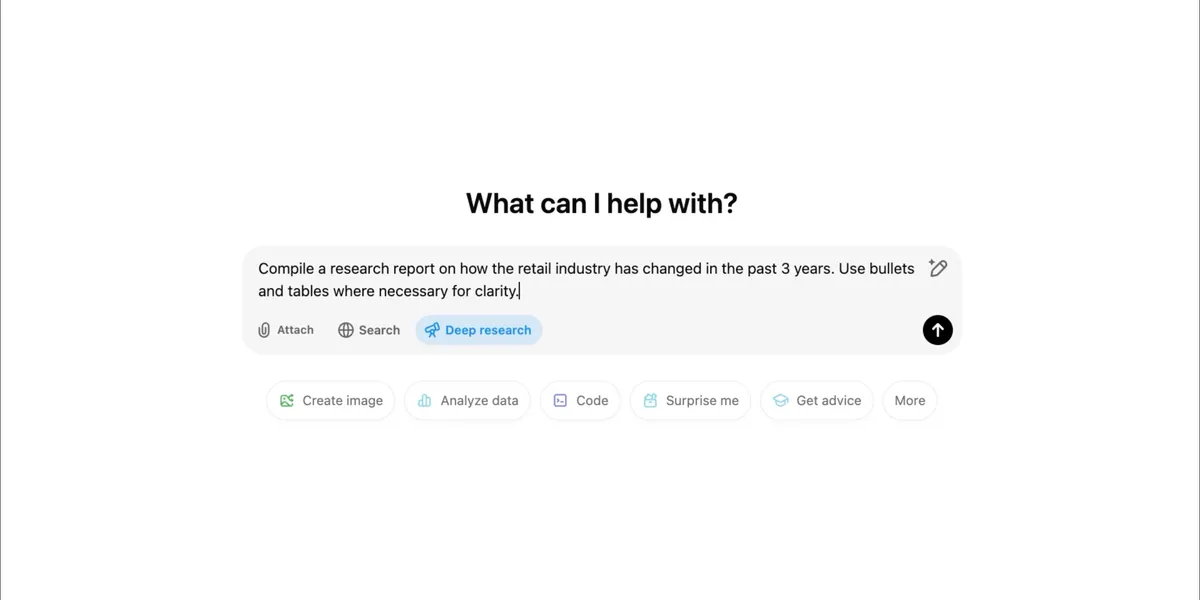
You give ChatGPT a research question. Deep Research searches the web and combines findings in a report with source links. It can track trends and compare competitors. It can also research technical questions and summarize sources.
At launch in February 2025, access began with ChatGPT Pro at $200 per month. OpenAI said it planned to extend access to Plus, Team, and Enterprise subscribers.
The article presents it as research support for small teams. It may handle tasks that would otherwise go to analysts or consultants.
Ways business owners could use Deep Research
Deep Research may reduce the time spent gathering information. Common uses include:
1. Learn about your market
Deep Research can summarize market trends and customer feedback in minutes. The article contrasts that with the hours spent gathering information from industry reports. This may help when you test whether people want a business idea or track changes in an industry.
2. Compare competitors
Compare products, prices, and customer feedback. Note how each company presents its products. Use the comparison to look for gaps and adjust your plan.
3. Research ideas for new products
Deep Research can find technical details, research papers, and rule changes. The article gives AI, financial technology, and biotechnology as examples. In these fields, it can also scan patent applications.
4. Use information to plan your business
Use Deep Research to find figures, expert views, and examples for a business plan. It can also help review expansion plans or prepare an investor presentation.
5. Content Creation
Useful content can help people trust a business. Deep Research can find popular topics and summarize studies. It can also gather information for blogs, reports, and newsletters. Perplexity AI’s Pages feature can turn those findings into pages ready to publish.
Other ways Deep Research may help small teams
Using Deep Research as part of regular work may help in four ways:
1. Make decisions with more information
Deep Research may help you compare options faster. A founder can use its findings to test an idea or change direction.
2. Get more research help with a small team
Large companies often have analysts and consultants on staff. Startups may not. The article frames Deep Research as lower-cost research support for small teams.
3. Follow changes in your industry
Markets shift. Deep Research may help owners notice changes and respond sooner. Regular checks can help a team spot a shift before competitors do.
4. Finding product ideas
Research across fields can reveal new ideas. Deep Research may show links between industries and ways to distinguish a product.
Limits and Risks
The article identifies these limits:
1. Accuracy and Verification
AI-generated research can misinterpret data or include inaccuracies, so human oversight matters. Use Deep Research as a starting point, not a final answer. Fact-check key insights.
2. Overreliance on AI
The tool supports decision-making but does not replace entrepreneurial judgment. AI literacy matters: refine queries, interpret results, and cross-check findings.
3. Limited Access and Cost
At publication, ChatGPT Pro cost $200 per month. OpenAI said it planned lower-cost access. These are launch-period details, not a current plan comparison.
4. Ethics and rules
When using AI-driven research:
- Include source links when you publish findings.
- Follow industry rules, especially in finance, healthcare, or law.
- Use AI to help people with expertise, not replace them.
Steps to Use Deep Research
To integrate the tool:
1. Check access and price
In February 2025, ChatGPT Pro cost $200 per month. OpenAI said it planned lower-cost access.
2. Choose the most useful tasks
Decide which tasks may benefit most from AI research. Consider learning about a market, tracking competitors, or planning a product.
3. Write a clear research question
Output depends on the question. Be specific. For example: “What were five e-commerce trends in 2025? Support each one with an industry report.”
4. Check facts and improve your question
Treat AI reports as a first draft. Check key facts. Refine your question and rerun the research to test accuracy.
5. Make AI Research a Habit
Use Deep Research in weekly strategy sessions to stay informed on market shifts.
6. Try different uses and adjust
The tool may change. Try different tasks to see where it helps your business.
What small teams can do next
Deep Research gathers information from several sources. Check its claims before using the findings in a decision.
For related tools and ways to use them, see our complete guide to AI tools for entrepreneurs.
Main points
Deep Research searches the web and returns reports with source links. Owners can use it to study markets, competitors, products, and plans. People still need to check the findings before using them. AI research may help small teams work faster.
Use it for research tasks it can handle, then check the claims before acting on the report.
FAQ
What is Deep Research in ChatGPT?
Deep Research browses web sources. It combines findings in a ChatGPT report with citations.
How can entrepreneurs use Deep Research?
Use it to study markets and competitors. It can also help research products, plan a business, and find content ideas. Check source links before acting.
How reliable is ChatGPT Deep Research?
AI research can misread information or include errors. Treat reports as a starting point. Check key claims against the source links.